About | Fredrik Sandvall
My work sits at the intersection of people, capital, and long-term value. Outcomes are rarely determined by effort alone. They are shaped by incentives, structure, and the quality of decisions as complexity increases.
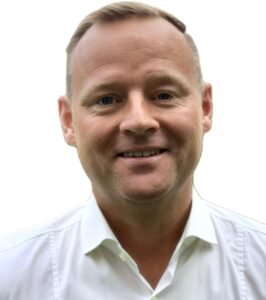
Fredrik Sandvall
This perspective was formed through operating roles, board-level work and dealmaking, and experience in environments where stakes were real and consequences compounded over time. It also draws from earlier work in military intelligence and operations, operating at both tactical and strategic levels across multiple regions, in contexts ranging from peacekeeping to active conflict, where clarity, coordination, and trust were not theoretical concepts but operational necessities.
From execution to oversight
Early in my career, I worked closer to execution. As scope and responsibility grew, my role shifted upstream toward governance, structure, and decision quality.
Execution matters, but direction matters more. When ownership, incentives, and authority are clear, capable people tend to do the right things without heavy control. When they are not, even strong teams struggle.
Today, my contribution is most effective through board-level work and dealmaking, where a small number of well-framed decisions remove friction and create durable momentum.
Trust as a practical discipline
Trust is often discussed as a value. I treat it as a system.
It shows up in:
- How partnerships are structured
- How capital is committed
- How governance holds under pressure
- How long-term alignment is protected
When trust is implicit and operational, speed increases without shortcuts. When it is fragile, progress becomes expensive.
This lens shapes how I engage with founders, boards, and institutions, and why I gravitate toward long-cycle work where integrity compounds rather than erodes.
How I choose to work
I am selective about what I engage in and deliberate about how I contribute.
I tend to work where:
- Multiple stakeholders must align toward a shared outcome
- Ownership and incentives matter more than optics
- Decisions have long-term consequences
- Equity is built through structure, not urgency
I avoid environments driven by constant promotion, short-term signalling, or misaligned incentives. Not because they lack ambition, but because they rarely produce durable results.
A long view
Alongside my professional work, I write and host long-form conversations exploring value creation, incentives, and complex systems. These platforms help me test ideas over time and stay anchored in first principles while operating in real-world complexity.
Orientation, not persuasion
This page is not meant to convince. It is meant to provide context.
If you are a founder, partner, or collaborator considering whether a conversation makes sense, this should give you a clear sense of how I approach decisions, responsibility, and long-term value creation.
If it resonates, the next step will be obvious.